Bums on Seats, Laughs in the Room: The British Studio Sitcom Is Down, Not Out

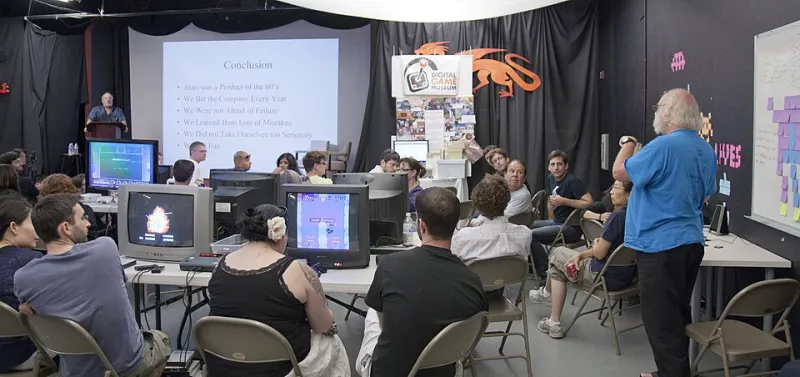
Photo: Dee Earley, CC BY-SA 2.0, via Wikimedia Commons
There's a sound that tells you exactly where you are. It's not the theme tune, and it's not the punchline. It's the rustle of a few hundred people shifting in their seats, the muffled cough, the warm-up man saying 'you've been brilliant, you have' before the cameras roll. It's the sound of the British studio sitcom — and for about twenty years, we've been told it's dead.
The Golden Age of the Wobbly Wall
Let's not pretend the studio sitcom was ever high art. It was better than that: it was a shared event. From Fawlty Towers to Only Fools and Horses, from One Foot in the Grave to The Vicar of Dibley, these were shows built for a Friday night in front of the telly, with a cup of tea and the knowledge that half the country was watching the same joke at the same time. The sets shook. The laughter was real. The actors played to the back row, because there was a back row.
The magic wasn't the writing alone — though the writing was often extraordinary — it was the contract between performer and audience. A studio sitcom lives or dies on that feedback loop. The laugh tells the actor where the joke lands; the actor's timing tells the audience when to laugh. It's theatre with a camera crew, and when it works, it's the most democratic form of comedy we've got.
Then the Cameras Got Quiet
Somewhere in the 2000s, telly decided it wanted to be film. The Office opened the door — no laughter, no audience, just a documentary crew and a lot of silent agony — and suddenly every commissioner wanted 'single-camera'. The Royle Family had already proved you could get a bigger laugh from a sofa and a stare than from a punchline. Peep Show put us inside a head. Gavin & Stacey made us cry. These were brilliant shows, and they changed the language of British comedy for the better.
But they also changed the room. Single-camera comedy is intimate, textured, and often funnier in retrospect than in the moment. It asks you to lean in, not let go. And somewhere in that shift, we lost the collective gasp — the sound of a hundred people laughing at the same thing at the same time. That's not nostalgia; that's acoustics.
The Laugh Track Is Not the Enemy
Here's where the argument gets messy. People hear 'studio sitcom' and think 'canned laughter' — that awful, tinny loop that tells you when to giggle. But a real studio audience is the opposite of canned. It's unpredictable, occasionally embarrassing, and always alive. The warm-up man isn't a con artist; he's a bridge between the audience and the show. He tells you when to clap, when to stop clapping, and when to laugh at the joke that didn't quite land so the edit has something to work with.
Is the recorded laugh a comfort blanket? For some, yes. It's the sound of telly from your childhood, the auditory equivalent of a sagging sofa. Is it a relic? For others, absolutely — a crutch for shows that can't survive without a laugh sign. The truth, as ever, is somewhere in the middle. A studio sitcom with a good script and a live audience is a joy. A studio sitcom with a bad script and a laugh track is a hostage situation.
The Quiet Return
So here's the interesting bit: in 2026, the studio sitcom isn't dead. It's just been hiding. The big streamers mostly avoid it — it's cheaper to shoot a single-camera comedy in a real house than to rig a studio and bus in an audience — but the old guard is still standing. Mrs Brown's Boys keeps coming back for festive specials because it knows exactly what it is. Not Going Out has been doing live-audience episodes for years. And there's a small but stubborn crop of new shows — pilots, theatre transfers, and the odd Channel 4 commission — that are brave enough to put bums on seats and cameras in the room.
You can spot them. They've got a set with a door that slams. They've got a sofa that faces the audience. They've got a warm-up man who tells you the fire exits are at the back. They're not trying to be cinema. They're trying to be telly — the kind of telly that makes you laugh out loud in your own living room because the people on screen are laughing too.
What We Lost and What We Gained
We lost the watercooler sitcom, the one everyone watched at the same time. We lost the joy of a wobbly wall and a prop that nearly falls over. We lost the sense that comedy could be a night out without leaving the house.
We gained intimacy, realism, and a wider range of stories. We gained shows that look like films and feel like diaries. We gained the cringe, the slow burn, the quiet devastation of a single-camera close-up.
Maybe we don't have to choose. The best comedy in 2026 will come from both rooms — the one with the cameras and the one with the audience. The studio sitcom doesn't need a revival; it needs a fair hearing. Give it a good script, a live audience, and a warm-up man who knows when to shut up. The laugh will take care of itself.