Six Episodes and Done: Why Short British Telly Is Outclassing the Ten-Hour Binge in 2026
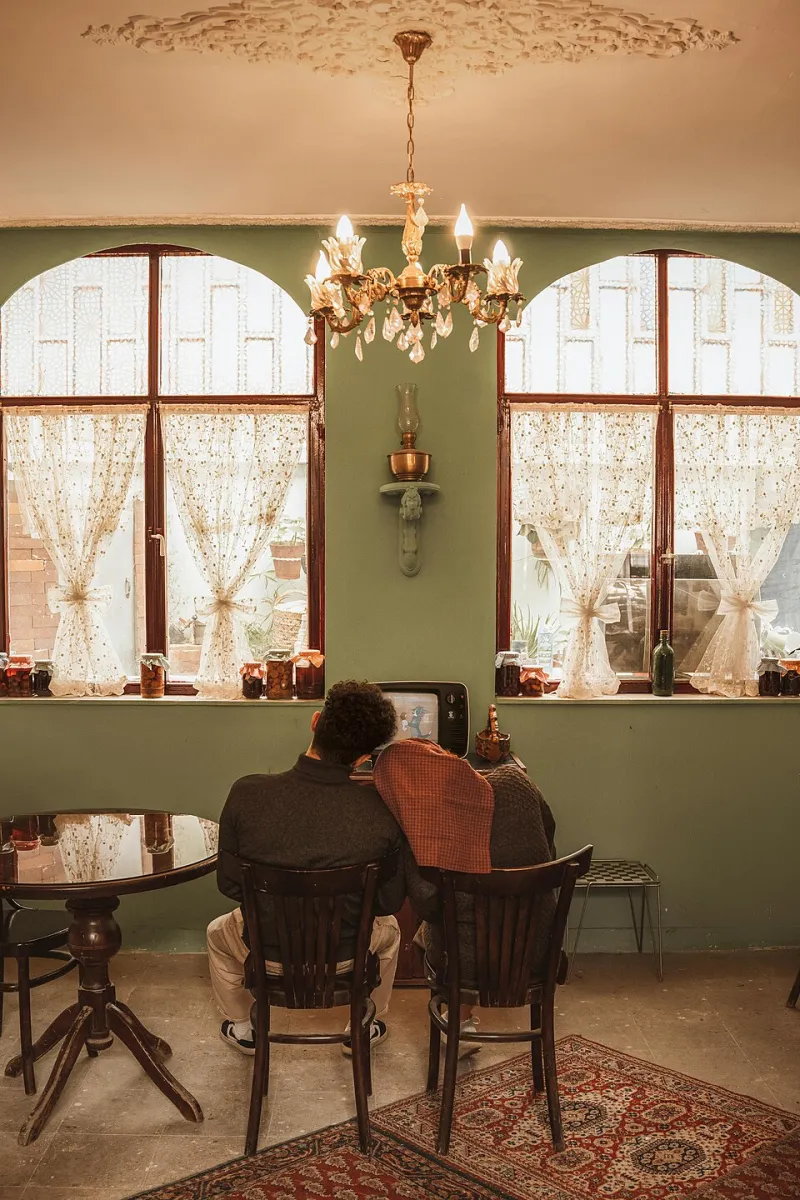
Photo: Voyefex11, CC0, via Wikimedia Commons
There is a particular feeling that arrives about forty minutes into the fourth episode of a ten-part streaming thriller. It's not enjoyment and it isn't boredom either. It's the sense that you've made a commitment you can't quite remember agreeing to, and that if you stop now the three hours you've already spent will have been wasted.
That feeling is why short-run British telly is quietly winning again. Not the big Christmas spectacles, not the reality juggernauts — the modest, punchy, six-episode things that start on a Monday and are over before the weekend.
The maths of a weeknight
Here's the thing the streaming giants keep getting wrong. A weekday evening doesn't have room in it for a ten-hour story. It has room for one episode, maybe two if the washing-up was quick. When a show asks for nine hours, most of us don't say no — we just drift away somewhere in the middle, quietly, and never mention it again.
A four- or six-part drama asks for something a normal person can actually deliver. Forty-five minutes, three nights running, done. You get a complete story, a proper ending, and a Tuesday that felt like it had a shape to it.
There's also the small matter of memory. A short run keeps every character in your head without a "previously on" montage doing the heavy lifting. You can hold the whole thing in your mind at once, which means you can actually think about it afterwards — argue about it, even. That's the difference between watching something and consuming it.
Why British telly has an advantage
The six-part model isn't a compromise here, it's the house style. Writers on this side of the Atlantic have always been comfortable telling a complete story in a tight number of episodes: one idea, one cast, one ending. That discipline shows up on screen.
It isn't just drama either. The half-hour comedy has quietly become the most rewatchable form on television, because a show that expects to end also gives itself permission to be funny about something specific. You can build a bigger world in six half-hours than some imports manage in twenty.
And crucially, British channels still schedule. That's the part the streamers keep forgetting. A show that goes out at 9pm on a Monday and again on Tuesday builds a conversation in a way that a box set dropped at 8am on a Friday simply can't. You go into work and everyone's at the same point. You can talk about the third episode without asking where someone's got to. That shared rhythm is worth an enormous amount and we've spent a decade pretending it isn't.
The proof was already there in the schedules
Look at what's worked over the last couple of years. Weekly, stripped reality formats have held their audiences while whole box sets have quietly slid past. Blue Lights built its reputation on a short, tense run and a weekly cliffhanger. Big Boys turned a six-episode comedy into the kind of show people quote at each other. Am I Being Unreasonable? left everyone wanting more precisely because it didn't overstay.
The pattern for 2026 looks much the same: three-parters on ITV, four-part dramas on Channel 4, tight sixes on BBC One and the BBC iPlayer box sets arriving alongside rather than instead of a broadcast slot. Even the major streamers have started trimming their runs, because they've noticed the completion rates.
Where the binge still wins
Let's be fair to the long-form stuff. A sprawling ten-hour import is a wonderful thing when you've got a rainy Sunday, a head cold, or a long-haul flight. There's real pleasure in total immersion, and some stories genuinely need the room: big ensemble pieces, crime sagas, anything with a family tree complicated enough to need notes.
The problem isn't length, it's default length. When everything is nine hours because that's the house format, the length stops meaning anything. A story that earns its ten episodes is thrilling. A story that's been stretched to fill them is exhausting — and most of us can tell the difference by episode three.
The 45-minute test
Here's a crude but useful way of deciding what to start next. Ask yourself whether you'd happily watch one episode on a Wednesday night with a cup of tea and no phone, then go to bed. If the answer is yes, the show is probably built right. If the honest answer is "I'd want three hours and a takeaway", fine — but know that's what you're signing up for, and plan accordingly.
And if a show stalls, drop it. There's no loyalty scheme for finishing things. The best programmes of the past few years were ones where the whole thing was over before you had a chance to get bored.
Paam TV's 2026 short-run watchlist
We'll be adding to this as the year goes on, but as things stand, these are the categories worth setting a reminder for:
- The BBC One three-parter. Usually a true-story thriller, usually the lead performance of the year, usually scheduled across a single week. Watch it as it goes out — half the pleasure is the following morning.
- The Channel 4 comedy pairing. Two half-hour comedies back to back on a Friday, both six episodes, both with an actual ending. The most civilised hour on television.
- The ITV four-part drama. Big names, big houses, and a twist in episode three. Designed for a Sunday-to-Wednesday run. Set series link and thank us later.
- The stripped reality format. Every night for a fortnight, one episode, no decisions to make. The nearest thing modern telly has to appointment viewing.
- The iPlayer box set that arrives alongside a broadcast slot. The best of both worlds: you can binge it if you like, but everyone's watching at roughly the same pace anyway.
One episode a night, and no guilt
What all of this adds up to is permission. Permission to watch one episode, go to bed, and come back tomorrow. Permission to be a casual viewer of four things rather than a stalled viewer of one. Permission to finish what you start because it was designed to be finished.
Streaming gave us everything on demand and somehow made telly feel like homework. The short British run gives us our evenings back. That's the revolution — not a format change, just a sensible number of episodes at a sensible time of night.